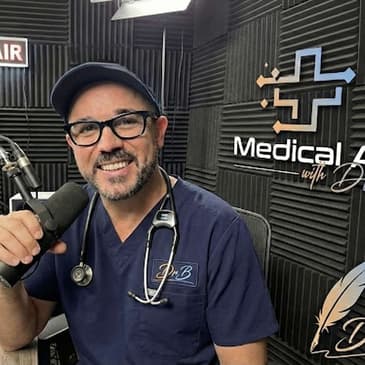
Welcome to another episode of The AI-Ready Doctor Podcast! In this thought-provoking conversation, Dr. Hassan Bencheqroun is joined by special guest Dr. Irina Koyfman, a DNP, educator, caregiver, and author of "The Sandwich Generation Handbook" and "The AI Health Companion." Together, they explore the rapidly changing landscape where artificial intelligence is no longer just diagnosing patients in hospitals, it’s organizing medications, explaining lab results, and even entering our kitchens and living rooms.
This episode dives into the pressing questions facing modern medicine: How can patients use AI tools safely? Where do the risks lie, especially in light of real-world stories like AI making critical health errors, or successes where it leads to life-saving insights? Dr. Hassan Bencheqroun and Irina discuss practical frameworks for using AI in healthcare, the importance of context and critical thinking, and why the irreplaceable human touch compassion, presence, and trust remains at the heart of caregiving.
Tune in to learn how to trust but verify, talk to your AI tools effectively, and bring your questions to those you trust, so you can be AI-ready in your healthcare journey.
00:00 AI in everyday healthcare
04:44 Writing initial book on life skills
08:09 ChatGPT and medical data risks
12:45 Talking to AI effectively
14:48 Discussing AI and prompt engineering
17:09 Using AI like a librarian
21:07 Concerns about AI data privacy
25:42 Traditional vs modern medical diagnostics
26:39 AI and societal transformation
30:28 AI scams and misinformation warnings
34:51 AI and lived experience limitations
37:39 Preparing for Dermatologist Appointments
42:06 Using ChatGPT for medication organization
44:28 AI in medicine advice
47:15 AI's role in patient care
Trust, Technology, and the Human Touch: Insights from “The AI-Ready Doctor” Podcast
In a world where artificial intelligence is rapidly weaving itself into the fabric of everyday life including our most private and vulnerable health moments understanding how to use AI safely has never been more important. The latest episode of “The AI-Ready Doctor,” hosted by Dr. Hassan Bencheqroun and featuring the insightful Irina, explores both opportunity and caution in the new era of patient empowerment through digital tools.
Patients in the Driver’s Seat
Traditionally, AI in healthcare was the domain of professionals operating within the four walls of a hospital. What’s changed? As Dr. Hassan Bencheqroun points out, AI isn’t confined to clinical settings anymore. It’s now found in kitchens, supporting caregivers, interpreting lab results, managing medications, and sometimes even making life-or-death recommendations to patients at home 00:00:44.
The conversation opens with Irina, a doctor of nursing practice, educator, remote patient monitoring expert, caregiver, and author. She shares her journey as a member of the sandwich generation caring simultaneously for her children and aging family members and how this led to her authorship of “The Sandwich Generation Handbook” and “The AI Health Companion.” Her lived experience is a lens for what patients and caregivers need now: not just more information, but actionable wisdom delivered with empathy.
The Double-Edged Sword of AI Advice
AI’s growing role comes with its own perils and promises. Dr. Hassan Bencheqroun highlights two contrasting news stories: ChatGPT’s integration with personal health data, and a patient lawsuit following harmful AI-generated medical advice 00:07:24.
Irina underscores the “trust but verify” mantra with real stories a child’s rare diagnosis only revealed by AI after months of missed answers, contrasted by cases where AI’s output was literally dangerous (like recommending a toxic food additive) 00:09:05. The moral: AI can save or endanger lives depending on how we apply critical thinking.
To help the public navigate the gray zones of digital health advice, Irina introduces a simple traffic light analogy:
Green: Safe, general recommendations (e.g., exercise suggestions).
Yellow: Nuanced, important questions (e.g., dietary advice with medical conditions) verify and cross-check.
Red: Serious, clinical decisions about medications or diagnoses always seek professional review 00:10:49.
Mastering Prompt Engineering and Context
An AI tool is only as good as the question you ask. Dr. Hassan Bencheqroun and Irina agree that context is king: unlike Google’s keyword search, AI platforms need detailed, personalized input for useful output 00:12:45. Irina recommends introducing yourself to the AI, providing personal health context, and specifying your desired format for answers concise, evidence-based, and at a language level you can understand.
Her “RFT” framework is especially practical:
Role: What do you want AI to act as?
Task: What do you need it to do?
Format: How do you want the answer presented? 00:16:06
The Limits of Technology
Will AI replace clinicians? Both speakers are emphatic: No. While AI can amplify human capability, it can’t replace compassion, context, or the healing power of presence. Irina shares powerful stories of caregivers whose simple act of holding a dying patient’s hand outweighs any algorithm’s insights 00:29:05.
Navigating Scams and Misinformation
With scams and deepfakes on the rise, both experts urge listeners to pause and verify before acting on seemingly authoritative digital health content. When in doubt, bring AI-generated advice to a trusted provider or loved one for a critical second opinion 00:31:58.
Key Takeaways
Trust but verify. AI is a companion, not a replacement, in your healthcare journey.
Context matters. Give AI as much background as possible for meaningful help.
Protect your privacy. Always redact personal health info before uploading, and remember your paid tool is not automatically private 00:21:07.
Human care still reigns. No technology can substitute for empathy or true listening.
Stay curious and skeptical. Use AI, but question its outputs, and seek credible, compassionate counsel when needed.
As Dr. Hassan Bencheqroun concluded: “Medicine has never been just about answers. It’s about helping another human feel less alone.” AI can help, but it’s our collective wisdom—and our humanity—that will always matter most.
https://www.linkedin.com/in/drbmedicalai/
https://drbmedicalai.com/med-ai-academy/
“Disclaimer: Informational only. Not medical advice. Consult your doctor for guidance.”